Your basket is currently empty!
Category: Dive Sites

JU88 South, Malta – 105m Technical & CCR Dive Guide
Overview of the Dive Site
JU88 South is a WWII German Junkers Ju 88 twin-engine bomber lying upright on a sandy seabed at about 105–106 metres off the south-east coast of Malta, a few kilometres off Marsaskala. maltadives.com
Discovered during a remote-sensing survey and confirmed by divers in 2019, the wreck is remarkably intact, with the wings, engines and fuselage all in place. There is damage to the nose and tail but overall the aircraft is considered to be in good condition, suggesting a controlled ditching followed by battle damage. The Virtual Museum
This page is about JU88 South at ~105–106m, not the shallower Ju 88 North wreck at 55m off Baħar iċ-Ċagħaq. maltadives.com
Key Facts at a Glance
- Type: WWII German twin-engine bomber wreck (Junkers Ju 88)
- Location: Offshore, a few km off Marsaskala, south-east Malta maltadives.com
- Depth: Approx. 105–106 m to seabed and wreck
- Seabed: Flat sand
- Orientation: Upright, wings and engines in place The Virtual Museum
- Access: Boat dive; deep offshore site
- Certification: Advanced trimix (OC) or equivalent high-level CCR
- Gas: Hypoxic trimix, multiple deco gases; ideally CCR (Hollis Prism2)
- Management: Part of Malta’s underwater cultural heritage; access via registered dive centres and clubs under Heritage Malta’s programme Heritage Malta
Location & Access
JU88 South lies in open water south-east of Malta, on a sandy plain in 100+ metres of water. Coordinates published by the Underwater Malta virtual museum give a position of 35° 53′ 7.08″ N, 14° 37′ 58.44″ E with a depth of 106m. The Virtual Museum
- Access:
- Boat only, usually via specialist technical boats running deep heritage wreck trips.
- A shot line is mandatory for controlled descents and ascents.
- Permits / access control:
- The site forms part of Malta’s managed underwater cultural heritage; diving is organised through registered dive centres and clubs, in line with Heritage Malta requirements for deep wrecks. Heritage Malta
Depth Range & Profile
- Seabed depth: ~105–106 m
- Wreck height: Aircraft sits almost flush on the sand; minor relief from engines and tail plane
- There is no shallower section – you are on the bottom depth as soon as you arrive at the aircraft.
Bottom times are necessarily short and decompression obligations long. This is very much an expedition-style dive rather than part of a casual holiday week.
Recommended Certification Level
JU88 South is appropriate only for divers with significant deep trimix or CCR experience.
- Open circuit:
- Advanced / full trimix certification (e.g. PADI Tec Trimix or equivalent)
- Comfortable with 90m+ dives in similar conditions
- Proven experience managing multiple deco gases and long run-times
- CCR / Hollis Prism2:
- Advanced / full trimix CCR certification
- Solid bailout planning and recent deep bailout drills
- Prior experience on 90–100+ m CCR dives, ideally on deep wrecks around Malta
If you are not already relaxed at 70–90m with long deco and heavy task loading, JU88 South is not the next step – it’s a project goal to train towards.
Best Season & Typical Conditions
- Season: Late spring to autumn usually offers the best combination of sea state and daylight.
- Water temperature:
- Summer: ~15–18°C at depth
- Winter: 13–15°C throughout the column
- Visibility: Commonly 20–30 m, but can vary with plankton and weather. DIVE Magazine
- Sea state: Open-water boat run; conditions must be benign for shot-line work and deco.
Why Dive JU88 South?
What Makes This Site Special for Tec / CCR Divers
- Iconic deep aircraft wreck: A near-complete Junkers Ju 88 bomber, one of Malta’s most photogenic deep-water plane wrecks. DIVE Magazine
- Upright attitude: Unlike many aircraft wrecks, JU88 South lies upright with wings and engines intact, giving a dramatic “frozen in time” profile. The Virtual Museum
- Historical context: The Ju 88 was one of the Luftwaffe’s key bombers during the siege of Malta, used for raids on harbours, airfields and shipping. DIVE Magazine
- Challenging depth: At ~105m, it’s a serious deep-trimix or CCR objective – ideal for experienced teams wanting a focused project dive.
Dive Profile & Route Options
Typical Open Circuit Profiles
On OC trimix, gas volume and deco exposure are the main limiting factors. Expect:
- Hypoxic trimix back gas, multiple deco mixes
- Bottom times in the 12–18 minute range depending on team, fills and chosen conservatism
- A pre-planned, tight circuit of the aircraft:
Common route:
- Descend on the shot line directly to the fuselage / wing root.
- Check orientation, confirm team position and gas/time.
- Follow a circuit around:
- Nose section and cockpit area (now open/damaged)
- Starboard and port engines and landing gear remains
- Tail plane and damaged tail fin
- Begin ascent on schedule – there is no stretching the plan at this depth.
Typical CCR / Hollis Prism2 Profiles
On the Hollis Prism2, JU88 South becomes more logistically practical, though still extreme:
- Longer effective bottom time (e.g. 18–25 minutes) for similar overall runtime compared to OC
- Greatly reduced helium usage and simpler topside logistics
- Bailout planning is king – all plans built around a realistic full-bailout scenario from 105m
A typical CCR dive might include:
- Controlled descent on 1.0–1.2 setpoint
- One or two full circuits of the aircraft, allowing time for photos/video
- Early ascent if anything feels off – there’s zero margin for “just one more shot” at 105m.
Actual run-times and schedules must be generated with proper software and aligned with your training.
Entry, Exit & Navigation Notes
- Descent: On a fixed shot line; often nothing visible until the last part of the drop.
- Bottom navigation:
- The wreck is small compared to a ship, so one circuit covers most of it.
- Orientation is simple: fuselage, wings, tail – but it’s easy to lose the shot in poor vis if you wander too far into the sand.
- Ascent: Entire ascent and deco normally done on the same line, sometimes with a deco trapeze or support stage at shallower stops.
Conditions & Hazards
Environmental
- Current: Can be present at depth or mid-water. Drift off the line at 50m with multiple stages and you’ll have an unpleasant time getting back.
- Visibility: Usually good, but silt from the seabed or plankton blooms can reduce it quickly.
Wreck-Specific Hazards
- JU88 South is relatively compact, but:
- Exposed wiring, twisted metal and control cables offer snag points.
- There may be occasional fishing line or net debris in the area. maltadives.com
- Penetration is not appropriate – this is a fragile aircraft structure at extreme depth.
Safety & Minimum Experience
- You should already be:
- Comfortable with long TTS and multi-gas ascents
- Regularly practising lost-gas and bailout drills
- Diving with a stable, well-rehearsed team
JU88 South is the kind of dive that rewards conservative planning and ruthless self-assessment.
Wreck / Site History
The Aircraft – Junkers Ju 88
The Junkers Ju 88 was a German twin-engine all-metal bomber, around 15 m long with a 20 m wingspan, used in multiple roles including bombing, reconnaissance and night fighting. maltadives.com
Role in WWII Around Malta
During the siege of Malta, Ju 88s formed a major part of the Luftwaffe bombing force, attacking airfields, shipping and harbour facilities. DIVE Magazine
JU88 South – Loss & Discovery
- The JU88 South wreck appears to have ditched in a controlled manner, coming to rest upright on the seabed. Heritage Malta
- Damage on the tail suggests it may have been shot down by Allied aircraft. Heritage Malta
- The wreck was identified through surveys in the 2010s and is now part of Malta’s managed deep-wreck heritage programme. The Virtual Museum
Points of Interest Underwater
Key Aircraft Features
On the dive you can expect to see:
- Nose and cockpit: Damaged/glazed nose missing, exposing the cockpit area and bomb-aimer’s position. The Virtual Museum
- Twin engines and wings: Engines and mainplanes lying flat on the sand, often with marine growth and small fish schools. The Virtual Museum
- Tail section: Partially damaged, likely from combat, but still recognisable as a Ju 88 tail assembly. The Virtual Museum
Marine Life & Photography
Despite the depth, the wreck attracts:
- Lobsters and other crustaceans hiding in wreckage gaps maltadives.com
- Rockfish, damselfish and occasional larger visitors
- Encrusting sponges and hydroids that glow under video lights
Photographically, this is all about:
- Big-picture shots of the aircraft profile
- Engine details
- Tail and control surfaces
Time is very limited, so having a pre-planned shot list helps.
Training & Skill Development Opportunities
Courses & Workshops
JU88 South itself is usually not used as a training site, but it makes an excellent capstone for:
- Advanced / full trimix training (OC or CCR), once all performance criteria are met on shallower dives
- CCR expedition skills workshops for bailout planning, deep problem solving and camera handling under time pressure
Skills You Can Refine
- Precision ascent control from very deep water
- Team communication when everyone is heavily kitted and on big deco schedules
- Realistic post-dive debriefing and project planning skills
Gear & Gas Planning Notes
Cylinders, Stages & Bailout
- Open circuit:
- Backmount twins or large sidemount configuration with multiple stages
- Absolutely no “minimal” setups – redundancy is crucial.
- CCR (Hollis Prism2):
- At least two sizeable bailout cylinders, sized for a full ascent from 105m with contingencies
- Clear, written bailout decision points and team-agreed protocols
Deco Gases & Trimix
- Hypoxic trimix bottom gas tuned for narcosis management and oxygen exposure
- 1–3 deco gases depending on your planning philosophy and logistics
- Explicit gas switch confirmation procedures – no shortcuts at 105m.
Logistics & Surface Interval
Boat & Day Planning
Trips to JU88 South are typically:
- Single-project dive days with one deep dive only
- Early starts and long surface run-times
- Supported by operators familiar with Heritage Malta procedures and deep-wreck logistics Dive Systems Malta
Expect:
- Full briefing on wreck history, access rules and emergency planning
- Onboard O₂ and appropriate emergency kit
- Post-dive debriefs once everyone is rehydrated and warmed up
Why Dive JU88 South with Jason Trott & diveprism2.eu
Small Teams, Safety First
On deep objectives like JU88 South, Jason runs very small CCR/trimix teams, focusing on:
- Thoughtful gas and bailout planning
- Clear roles and pre-agreed procedures
- Conservative decision-making on the day
Wreck, CCR & Prism2 Experience
Jason Trott is a Malta-based PADI Tec instructor and Hollis Prism2 CCR instructor specialising in technical, CCR and wreck diving around Malta. He’s logged extensive hours on deep heritage wrecks, including JU88 South, HMS Russell and other 80–110m sites.
Jason Trott is a Malta-based PADI Tec and Hollis Prism2 rebreather instructor at diveprism2.eu, offering small-team, wreck-focused CCR and trimix training plus guided technical dives on Malta’s deep WWII wrecks.
FAQs About Diving JU88 South
How deep is JU88 South?
The wreck lies upright at around 105–106m on a sandy seabed off south-east Malta. Maltadives.comIs this the same as the Ju 88 North at 55m?
No. JU88 South is the deep wreck (~105m). The north wreck is a separate Ju 88 at ~55m off Baħar iċ-Ċagħaq. maltadives.comWhat level of diver do I need to be?
You’ll need advanced / full trimix or equivalent level CCR certification with significant experience in 70–90m+ dives and complex decompression.Can I dive it on open circuit or is it CCR only?
Both are possible, but CCR (e.g. Hollis Prism2) is usually the more practical and cost-effective approach at this depth. OC dives will have very short bottom times and huge gas requirements.Is a permit required?
The site is part of Malta’s managed underwater heritage and is dived through registered dive centres and clubs operating under Heritage Malta’s framework. Heritage MaltaHow to Book or Plan Your Dive
Check Your Readiness
Before thinking about JU88 South, ask honestly:
- When was your last 90m+ dive?
- How current are your bailout and lost-gas drills?
- Do you have a stable team and suitable kit?
If there are any doubts, treat JU88 South as a medium-term goal, not a next-week objective.
Contact Jason for a Progressive Plan
Jason can help you:
- Map out a training and warm-up path using Malta’s shallower wrecks (including the 55m Ju 88 North, destroyers and deep ships)
- Build confidence on the Hollis Prism2 CCR or open-circuit trimix
- Plan a dedicated JU88 South project day when you’re truly ready
Head to diveprism2.eu to get in touch, send your current certs and recent dives, and start planning your route to one of Malta’s most iconic deep-wreck dives.
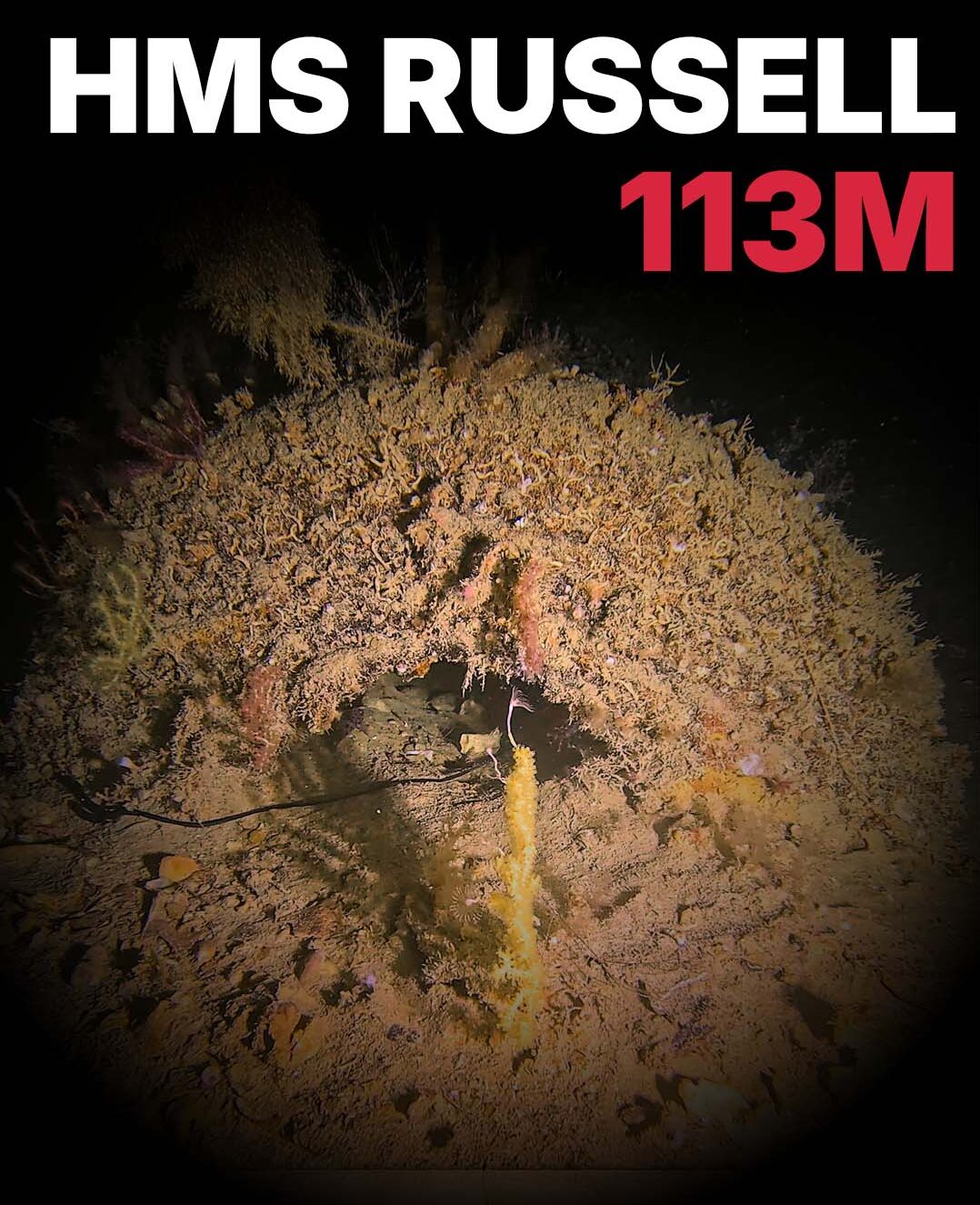
HMS Russell, Malta – Technical & CCR Dive Guide
Overview of the Dive Site
HMS Russell is a First World War pre-dreadnought battleship lying upside down on the sand at around 110–115 metres depth, roughly 6 km east of Fort St Elmo / Valletta, Malta. maltadives.com This is an expedition-level deep wreck, suitable only for highly experienced trimix and CCR divers with excellent team skills and discipline.
The wreck is huge (about 130–140 m long) and remarkably intact apart from the stern, which was blown off by the mine explosion. Wikipedia The surrounding seabed is littered with shells and gun cases, and some of the ship’s guns now sit upright in the sand, making this a powerful, atmospheric dive. maltadives.com
Key Facts at a Glance
- Type: Deep WWI battleship wreck, war grave
- Location: Offshore east of Valletta / Fort St Elmo, Malta maltadives.com
- Depth: Approx. 110–115 m to the seabed; top of hull a few metres shallower maltadives.com
- Access: Boat only, offshore site
- Certification: Advanced trimix (OC) or equivalent high-level CCR certification
- Gas: Hypoxic trimix, multiple deco gases; ideal for CCR (Hollis Prism2)
- Permits: Special Heritage Malta permit required to dive (war grave) DiveBoat.mt
- Best for: Experienced technical divers, deep wreck enthusiasts, CCR teams
Location & Access
HMS Russell lies in open sea, about 4–6 nautical miles off Valletta / Fort St Elmo, on a flat sandy seabed. Dive on Malta
- Access is by boat only, usually from Valletta or Marsamxett harbours.
- A shot line is essential for safe descent/ascent and for holding decompression stops in any surface chop.
- Because it’s a managed heritage wreck and a war grave, diving is only allowed with the correct permits and through authorised operators. Heritage Malta
Depth Range & Profile
- Seabed / guns: 112–115 m
- Upside-down hull: around 108–112 m along most of the wreck
- No real “shallow” section – you are in full-on deep trimix territory from the moment you leave the shot line. maltadives.com
Expect a vertical technical profile: a long descent, a short, carefully planned bottom phase, and then a long ascent with extended deep and mid-water deco.
Recommended Certification Level
HMS Russell is not an entry-level technical dive. It’s for divers who already have serious time at 70–90 m and are comfortable with complex gas, bailout and team management.
Recommended minimums:
- Open circuit:
- Full trimix certification (e.g. PADI Tec Trimix or equivalent)
- Substantial experience on 90 m+ dives in similar conditions
- CCR / Hollis Prism2:
- Advanced / full trimix CCR certification with experience in the 90–100+ m range
- Excellent bailout planning and real-world bailout drills completed recently
This is a dive where you should already be very comfortable with task loading, multiple deco gases, team procedures and problem solving at depth before ever stepping on the boat.
Best Season & Typical Conditions
- Season: Late spring to autumn is usual, when sea state and daylight are most favourable.
- Temperature:
- Summer: ~15–18°C at depth (thermoclines common)
- Winter: 13–15°C throughout the water column
- Visibility: Often 20–30 m, but can drop with plankton or weather. Divers Guide
- Sea state: This is open sea; wind and swell can build quickly. Skippers will be conservative.
Why Dive HMS Russell?
What Makes This Site Special for Tec / CCR Divers
- Scale & history: A full-size British battleship, sunk in 1916 after striking mines laid by German submarine U-73 while approaching Malta. Heritage Malta
- Pristine deep environment: Opened to civilian diving only in 2019; still relatively few teams have visited compared to shallower wrecks. maltadives.com
- Serious depth: A true proving ground for advanced trimix and CCR skills – more expedition than “fun dive”.
- Atmosphere: As an official war grave, the dive has a solemn, respectful feel that most divers never forget. Heritage Malta
For capable teams, HMS Russell is one of Malta’s “bucket list” deep wrecks alongside HMS Olympus, HMS Southwold and the deep destroyers. DIVE Magazine
Dive Profile & Route Options
Typical Open Circuit Profiles
On OC, gas volume is the main limiter. Expect:
- Helium-rich, hypoxic back gas (e.g. 8–12% O₂ range depending on plan)
- At least two, often three deco gases
- Bottom times typically 15–20 minutes for realistic gas and runtime control
Most teams:
- Drop the shot to the upturned hull amidships
- Run a short, pre-agreed route along one side of the hull, checking key features and the surrounding seabed for guns and debris
- Start ascent on schedule – overrunning the plan is not an option at this depth
Typical CCR / Hollis Prism2 Profiles
On the Hollis Prism2, HMS Russell becomes more logistically manageable, though still extremely serious:
- Longer possible bottom times (e.g. 20–30 minutes) for similar or slightly extended runtime compared to OC
- Better gas logistics and reduced helium cost
- Bailout plan drives everything – you plan as if you might have to complete the entire ascent on OC
A common approach:
- Descend on a fixed setpoint (e.g. 1.1–1.2)
- Maintain a conservative working setpoint at depth
- Spend the bottom time exploring one flank of the hull and selected debris fields
- Begin ascent with generous deep stops and pre-planned bailout options at multiple points
Nothing here replaces proper planning software and training – your actual runtime and schedule must be calculated specifically for your team and conditions.
Entry, Exit & Navigation Notes
- Descent is along a permanent or temporary shot line placed near the mid-section.
- There is usually no visual of the wreck until the last part of the descent – expect a blue-water drop until your lights pick up the hull.
- Navigation on the wreck is relatively simple: it lies upside down on sand with the bow and stern clearly oriented, but you must keep strong situational awareness and not stray from the shot in poor visibility. maltadives.com
- Ascent and all deco are done on the same line, often with additional deco trapezes or support stages for comfort.
Conditions & Hazards
Current, Visibility & Temperature
- Current: Can be variable; even moderate current is magnified when you’re trying to hold stops with big cylinders. Divers Guide
- Visibility: Usually good, but plankton or weather changes can reduce it significantly, especially in mid-water.
Overheads, Entanglement & Other Risks
- HMS Russell is a war grave. Penetration is not appropriate.
- There may be fishing line and nets on and around the wreck, plus scattered ordnance on the seabed – this is not the place to “collect souvenirs”. Divers Guide
- Depth means that any issue is immediately life-threatening if not handled perfectly: CO₂ issues, loop flood, gas switch errors, lost deco gas, etc.
Safety Tips & Minimum Experience
- Only attempt this wreck with:
- A well-practised team used to working together
- Recent deep trimix or CCR dives in the 70–90 m range
- A support plan that may include surface / in-water support divers on shallower stops
- Treat this as a project dive, not something you add to a casual holiday week.
Wreck / Site History
Background & Historical Highlights
HMS Russell was a Duncan-class pre-dreadnought battleship, launched in 1901 and serving in the Mediterranean and the Dardanelles during WWI. Wikipedia
In April 1916, while returning to Malta for resupply, she struck mines laid by German U-boat U-73 just outside Grand Harbour and sank shortly afterwards. Around 125 members of her crew were lost. Heritage Malta
The wreck was first located and dived in 2003 by a British technical team and was only opened to controlled technical diving in 2019 as part of Heritage Malta’s deep wreck initiative. maltadives.com
Notable Stories or Incidents
Many first-hand accounts describe the slow capsize and evacuation, with lifeboats launched before the final explosion and sinking. Surviving officers and crew later served in senior wartime roles, adding to the ship’s historical significance. Wikipedia
Points of Interest Underwater
Key Structures / Features to See
Because the ship rests upside down, you’ll see:
- The curving hull and keel dominating your view
- Large holes and damage towards the missing stern where the mine detonated
- Guns and ammo cases scattered around the sand, some guns upright and very photogenic maltadives.com
- Structural elements like casemates and deck edges partially exposed beneath the hull
Marine Life & Photographic Opportunities
Despite the depth, HMS Russell hosts:
- Black and red corals, hydroids and sponge growth
- John dory and other deep-water fish hunting along the hull maltadives.com
- Occasional pelagics passing in the blue
This is very much a “big camera, big lights” dive – expect dark water, strong contrasts and limited time to set shots.
Training & Skill Development Opportunities
Suitable Courses or Workshops
HMS Russell is a target dive rather than a training site itself, but it can form the pinnacle of a carefully structured training plan:
- Advanced / full trimix programmes (OC or CCR)
- CCR expedition workshops focusing on bailout, team protocols and deep problem solving
- Debrief-heavy coaching on gas planning, thermal protection and decompression strategies
Skills You Can Practise Here
- Precise ascent control and deep stops in blue water
- Team navigation and communication with limited reference points
- Photographic workflow under strict time pressure
Gear & Gas Planning Notes
Recommended Cylinders / Bailout
- Open circuit: Twinset or backmounted twins with multiple stages; nothing minimal here
- CCR: At least two substantial bailout cylinders, sized realistically for a full bailout from 115 m with contingencies
Deco Gases & Trimix Considerations
- Hypoxic trimix for bottom gas (e.g. 8–12% O₂ range with appropriate helium fraction)
- One or more high-O₂ deco mixes staged at planned stop depths
- Redundant gas switch confirmations and clear team-wide protocols
All of this must be tailored to your training agency guidelines, software and conservative personal limits.
Hollis Prism2 / CCR-Specific Notes
For Hollis Prism2 divers with Jason:
- Careful pre-dive checks and loop integrity are non-negotiable
- Emphasis on bailout drills, BO switches, and scrubber management long before the project
- Jason will help design a step-up series of progressively deeper CCR dives around Malta’s other deep wrecks before considering HMS Russell
Logistics & Surface Interval
Meeting Point & Boat Logistics
Trips to HMS Russell are boat-only, with departure typically from Valletta / surrounding harbours depending on conditions and boat partner.
On the day:
- Early start, full briefing on wreck history, permit conditions and emergency plan
- Surface support and emergency O₂ present
- Long surface intervals and conservative planning – this is usually the only deep dive of the day
Facilities Nearby (Parking, Food, Fills)
- Cylinder and sorb fills, helium and O₂ are arranged in advance through Jason and partner tech centres.
- Post-dive debriefs and food options in Valletta / nearby towns round off the day.
Why Dive This Site with Jason Trott & diveprism2.eu
Small Groups & Safety Focus
Jason runs very small teams, especially on ultra-deep dives like HMS Russell. The focus is on:
- Thorough pre-dive planning
- Calm, structured execution
- Honest debriefs and learning points after every project dive
Wreck & Tech Diving Experience
Jason Trott is a Malta-based PADI Tec instructor and Hollis Prism2 CCR instructor who specialises in deep wreck and CCR training around Malta, including deep heritage wrecks like HMS Russell. His approach blends real-world expedition experience, solid procedures and a strong safety culture.
FAQs About Diving HMS Russell
How deep is the dive?
HMS Russell sits around 110–115 m on the seabed, with the upside-down hull only a few metres shallower. maltadives.comWhat level of diver is this for?
Only for advanced trimix or CCR divers with extensive experience in 70–90 m+ technical dives and excellent buoyancy, gas and team skills.Can I dive it on open circuit and CCR?
Yes, but CCR (such as the Hollis Prism2) is usually more practical for gas logistics. On OC, expect very limited bottom time and large gas requirements.What are the main risks?
Extreme depth, long decompression, potential current and entanglement, plus the general risks of deep trimix or CCR diving. This is a managed war-grave site and must be approached with full respect and preparation.How to Book or Plan Your Dive
Check Dates & Availability
Because of permits, logistics and depth, HMS Russell dives are planned as special project days, not everyday outings.
Step 1: Decide whether your current experience genuinely matches the demands of a 110–115 m wreck.
Step 2: If it does, get in touch early so Jason can align permits, boat, gas logistics and any warm-up dives.Contact Jason for a Training or Dive Plan
If you’re aiming for HMS Russell but aren’t quite there yet, Jason can build a progressive training path on Malta’s shallower and mid-range wrecks – on open circuit or the Hollis Prism2 CCR – leading logically toward this dive.
You can:
- Reach out via the contact form on diveprism2.eu
- Send a message with your current certifications, recent dive history and goals
- Ask about custom Tec / CCR coaching and deep wreck weeks in Malta
HMS Russell is not just another wreck – it’s the kind of dive you plan for, prepare for, and remember for the rest of your diving life.

HMS Southwold – Stern Section, Malta – 72m Technical & CCR Dive Guide
Overview of the Dive Site
The HMS Southwold stern is the aft section of a British Type II Hunt-class destroyer sunk in 1942, lying upright on a sandy seabed at around 72–73 metres depth, roughly 1.5 miles off Marsaskala Bay on Malta’s south-east coast. maltadives.com
The wreck of HMS Southwold is split in two: a larger bow section and a smaller stern section about 28–30 metres long, sitting approximately 300 m apart. The stern is compact but packed with detail – guns, depth-charge racks and stern structures – making it a favourite for experienced technical divers and CCR photographers. maltadives.com
As with many of Malta’s deep wrecks, HMS Southwold is now a protected heritage site and war grave, dived under permit through authorised operators. The Virtual Museum
Key Facts at a Glance
- Type: WWII British Hunt-class destroyer stern section
- Location: ~2.4 km (1.5 miles) off Marsaskala Bay, south-east Malta DIVE Magazine
- Depth: Approx. 72–73 m (upright on sand) The Virtual Museum
- Length of stern section: ~28 m maltadives.com
- Seabed: Sand
- Access: Boat only
- Certification: Advanced trimix on OC or equivalent advanced CCR
- Permit: Managed by Heritage Malta; special permit and approved operator required maltadives.com
- Status: War grave; risk of unexploded ordnance
Location & Access
Both sections of HMS Southwold lie outside Marsaskala Bay on Malta’s south-east coast, on a flat sandy bottom. The Virtual Museum
- Access is by boat only, usually from harbours on Malta’s south or central coast.
- A shot line is always used for precise descent and ascent.
- The wrecks are listed as underwater cultural heritage sites; diving is only allowed through registered dive centres and clubs working under Heritage Malta’s regulations. DIVE Magazine
Depth Range & Profile
For the stern:
- Seabed / deck: ~72–73 m
- Highest relief (gun mounts, superstructure): a few metres above the seabed
Most teams treat this as a single-level deep trimix dive: you arrive at full depth, tour the section and then begin a long ascent with substantial decompression. There is no natural “shallow” part of the wreck. maltadives.com
Recommended Certification Level
The Southwold stern is a proper technical wreck; it’s deeper than the bow and usually treated as the more advanced of the two dives. Dive Systems Malta
- Open circuit:
- Advanced / full trimix certification (PADI Tec Trimix or equivalent)
- Significant experience in 60–70m+ dives with long decompression, ideally on wrecks
- CCR / Hollis Prism2:
- Advanced / full trimix CCR certification
- Recent bailout practice and real dives in the 70m range
- Solid experience with multi-stage CCR dives and team procedures
If your deep technical experience tops out at 45–50 m or you’ve had a long lay-off, you should treat the stern as a future objective and start with shallower wrecks and/or the bow section.
Best Season & Typical Conditions
- Season: Late spring to autumn is the main window for deep-wreck projects here.
- Water temperature: Typically 14–16°C at depth in spring, 15–18°C in late summer.
- Visibility: Often 20–30 m, but can be reduced by plankton or weather. DiveBoat.mt
- Sea state: Exposed to open-sea conditions; dives can be cancelled at short notice if wind or swell picks up.
Current can be an issue both on the bottom and especially during deco, so conservative planning and good line skills are essential. Calypso Sub-Aqua Club
Why Dive the HMS Southwold Stern?
What Makes This Site Special for Tec / CCR Divers
- Compact but detailed wreck: At ~28 m long, the stern packs in a twin gun mount, depth-charge racks and superstructure detail – a lot to see in one small footprint. The Virtual Museum
- Upright attitude: Unlike many collapsed sterns, this section sits upright, giving an intuitive sense of the ship’s lines and a dramatic profile on approach. The Virtual Museum
- Rich marine life: Reports consistently mention excellent coral and sponge growth and dense fish life, with some divers rating it among Malta’s best-decorated wrecks. maltadives.com
- History & context: A frontline WWII escort-destroyer sunk while protecting a vital fuel tanker during the siege of Malta, now resting as a war grave and underwater museum piece. The Virtual Museum
If you like “busy” wrecks where every metre has something to look at, the Southwold stern is incredibly rewarding.
Dive Profile & Route Options
Typical Open Circuit Profiles
On OC, gas volume and deco are the main limiting factors. Plans usually involve:
- Hypoxic trimix back gas
- 2–3 deco gases
- Bottom times around 15–20 minutes for realistic gas / runtime
A common route:
- Descend the shot to land near the stern deck.
- Confirm team, gas and time, then:
- Tour the twin aft gun mount and surrounding deck
- Move along the depth-charge racks and stern railings
- Check selected superstructure features without straying far from the line
- Begin ascent on schedule, not when you “feel like you’ve seen enough”.
Typical CCR / Hollis Prism2 Profiles
On the Hollis Prism2, the stern fits nicely into a moderate-length CCR project dive:
- Bottom time often 20–25 minutes depending on plan and comfort
- Runtime controlled by decompression choices and conservatism, not gas volume
- Bailout planning is the critical factor – you plan as if you might have to ascend the entire profile on open circuit from 72–73 m
A typical route mirrors the OC one, but with slightly more time for photography or video. Setpoints, gradient factors and bailout strategies are chosen according to your training and team agreement.
Entry, Exit & Navigation Notes
- Descent: Always on a shot or mooring line; expect mid-water with no visual reference until the last section of the drop.
- On the bottom:
- The stern lies upright; once you see the guns and depth-charge racks, orientation is straightforward. The Virtual Museum
- The site is compact; one or two slow circuits usually cover the main features.
- Ascent: Completed on the line, often with deco trapeze or support bottle at shallower stops depending on operator.
Because bow and stern are 300 m apart, this is always a separate dive from the bow section – you can’t reasonably swim from one to the other at depth. DIVE Magazine
Conditions & Hazards
Environmental
- Current: Can be strong at depth and mid-water; you must be able to hold stops and manage drifting teams without panic. Calypso Sub-Aqua Club
- Visibility: Usually good but can fluctuate; silt from the wreck and seabed can reduce it if teams are careless.
Wreck-Specific Risks
- The wreck is a war grave with unexploded ordnance (including depth charges) still present; nothing should be disturbed or removed. The Virtual Museum
- There are typical wreck hazards: sharp metal, wiring, cables and possible fishing line.
- Penetration is not recommended – the stern is relatively small and structurally compromised in places.
Minimum Competence
Teams should already be comfortable with:
- Long deco and multi-gas ascents
- Problem-solving at depth (lost gas, valve drills, CCR bailout)
- Maintaining formation and awareness in limited-time environments
Wreck / Site History
The Ship
HMS Southwold (L10) was a Hunt-class escort destroyer, around 85 m long with a beam of about 9.5 m, built in 1941 for convoy escort and anti-submarine duties. maltadives.com
Sinking
In March 1942, during the siege of Malta, Southwold was involved in escorting vital convoy ships including the fuel tanker Breconshire. While attempting to pass a tow line to Breconshire near Żonqor Point, she struck a mine, suffering severe structural damage and flooding of the engine room. The Virtual Museum
An attempt was made to tow the damaged destroyer, but her hull split and she sank in two main sections on 24 March 1942. Most of the crew survived; one officer and five ratings were lost. The Virtual Museum
Points of Interest Underwater
Key Stern Features
On the stern section you can expect to see:
- Aft twin 4-inch gun mount, still in situ and very photogenic The Virtual Museum
- QF 2-pounder (“pom-pom”) anti-aircraft gun mount structures
- Depth-charge racks with unused depth charges visible on the wreck The Virtual Museum
- Sections of superstructure and deck fittings, railing, bollards and other hardware
Marine Life & Photography
The Southwold stern is known for:
- Rich coral and sponge growth on guns and railings
- Shoals of damselfish, anthias, and frequent larger visitors in the blue
- Excellent wide-angle opportunities: the upright stern, gun silhouette, and depth-charge racks framed against open water
This is a dive where a well-planned shot list pays off – your time on the bottom is limited.
Training & Skill Development Opportunities
Courses & Workshops
The stern makes a strong capstone dive for:
- Advanced trimix programmes (OC or CCR) once performance at shallower depths is proven
- CCR expedition skills workshops, focusing on:
- Deep bailout planning
- Team protocols around shot lines and deco
- Camera handling and task loading on deep wrecks
Skills You Can Practise
- Fine-tuning buoyancy and trim around fragile structures and ordnance
- Maintaining team formation and communication on a compact but deep site
- Efficient ascent management with staged deco, particularly in mild current
Gear & Gas Planning Notes
Cylinders & Configuration
- Open circuit:
- Backmount twins or large sidemounts with multiple stages
- Sufficient back gas and deco gas reserves for contingencies
- CCR (Hollis Prism2):
- At least two appropriately-sized bailout cylinders with realistic gas for a full ascent from 72–73 m
- Clean rigging and stage placement for easy access around guns and racks
Gas & Deco
- Hypoxic trimix as bottom gas, tuned for low narcosis and safe oxygen exposure
- One or more deco gases (common choices: intermediate nitrox/trimix plus high-O₂ mix)
- Clear written plan covering gas switches, lost-gas scenarios and bailout decision points
Logistics & Surface Interval
Boat & Day Planning
Southwold stern dives are typically run as part of a deep-wreck programme, often paired with a separate day on the bow or other 60–70m wrecks. Expect:
- Early departure and detailed briefing
- Single deep dive with long runtime
- Long surface debrief and proper recovery time afterwards
Facilities for trimix fills, O₂ and CCR sorb are arranged in advance through Jason and partner tech centres.
Why Dive the Stern with Jason Trott & diveprism2.eu
Small Teams, Solid Procedures
On wrecks like the Southwold stern, Jason runs very small, well-matched teams, with emphasis on:
- Thorough planning and realistic gas/bailout strategies
- Clear roles and communication on the shot line and during deco
- Straight-talking debriefs to keep improving each dive
Wreck & Prism2 Expertise
Jason Trott is a Malta-based PADI Tec instructor and Hollis Prism2 CCR instructor specialising in wreck-focused technical and CCR diving around Malta, including HMS Southwold, HMS Russell, JU88 South and other deep WWII wrecks.
Jason Trott, at diveprism2.eu, offers small-group, wreck-focused trimix and Hollis Prism2 CCR training plus guided technical dives on Malta’s deep heritage wrecks, including the 72m stern of HMS Southwold.
FAQs About Diving the HMS Southwold Stern
How deep is the stern section?
The stern section of HMS Southwold lies upright at around 72–73 m on sand, about 300 m away from the bow. DIVE MagazineIs this different from the bow dive?
Yes. The bow is a separate section at roughly 65–70 m on its starboard side, while the stern is slightly deeper, upright and more compact. Both are independent technical dives. The Virtual MuseumWhat certification do I need?
You’ll need at least advanced trimix (OC) or equivalent CCR certification, with recent deep-wreck experience and comfort in the 60–70m+ range.Is a permit required?
Yes. HMS Southwold is managed by Heritage Malta; diving requires a special permit and must be done through approved operators. maltadives.comHow to Book or Plan Your Dive
Check Your Readiness
Before aiming for the stern, ask yourself:
- Am I current on deep deco dives?
- Have I recently practised valve drills / bailout and lost-gas scenarios?
- Do I have a stable, compatible team?
If not, Jason can help you build a progressive path via shallower wrecks and the Southwold bow section first.
Contact Jason for a Southwold Plan
To plan a Southwold stern dive or a full Southwold bow + stern project:
- Visit diveprism2.eu
- Send Jason your current certifications, recent tech dives and goals
- Ask about custom Tec / CCR coaching and Southwold project days in Malta
When you’re ready, the Southwold stern delivers exactly what deep-wreck divers love: history, structure, marine life and a serious but achievable challenge at 72 m.

HMS Southwold Bow – 70m Technical Wreck in Malta
Introduction – the “shallower” half of a serious wreck
HMS Southwold, a British Hunt-class destroyer, lies broken in two off Marsaskala on Malta’s south-east coast. The larger bow section sits on its starboard side, roughly 40 m long, on a sandy seabed around 65–70 m deep. Malta Dives
For technical divers, the bow is often the first half of the wreck they see: slightly shallower than the stern, a bit more bottom time to play with, and packed with detail around the fo’c’sle, anchors and forward gun mount.
Jason Trott, a Malta-based technical and Hollis Prism 2 instructor at diveprism2.eu, regularly dives the Southwold bow with qualified trimix and CCR divers as part of wreck-focused technical weeks.
History recap – how the bow ended up here
Built in 1941, HMS Southwold (L10) was an 86 m Hunt-class escort destroyer used for convoy protection during World War II. Wikipedia
In March 1942 she was escorting the Malta relief convoy MW10. After the Second Battle of Sirte, Southwold was ordered to assist the damaged tanker Breconshire. While manoeuvring close in heavy seas, she detonated a British mine. The blast under the engine room caused catastrophic structural damage; flooding and loss of power followed.
Attempts were made to tow the crippled destroyer, but her hull eventually split and she sank in two main sections – bow and stern – about 1.5 miles off Marsaskala Bay, roughly 300 m apart on the seabed. Heritage Malta
Today both sections are classified as separate underwater cultural heritage sites and war graves.
Location, depth and layout of the bow
- Position: Outside Marsaskala Bay, south-east Malta
- Depth: Seabed around 68–70 m; wreck lying on its starboard side Malta Dives
- Length of this section: Approx. 40 m, from the bow back to around the engine-room break Malta Dives
- Separation from stern: Roughly 300 m away across sandy bottom Heritage Malta
The bow section is instantly recognisable:
- The stem and anchor area dominate one end, with chain, hawse pipes and winches visible. Black and White Diving
- A forward twin 4-inch gun mounting remains in place near the break, echoing the similar mount at the stern. The Virtual Museum
- Hull plates and superstructure lie collapsed to the side, showing obvious blast and break damage. The Virtual Museum
Resting on its starboard side, the wreck gives you a strong sense of the ship’s lines – bow flare, deck camber and the way the hull tore when she split.
Permits, protection and ghost-net cleanup
The Southwold bow is not a casual “turn up and drop in” dive. It’s:
- Managed as an underwater cultural heritage site by Heritage Malta and the Underwater Cultural Heritage Unit (UCHU).
- Officially listed as a war grave, with unexploded ordnance present. Heritage Malta
- Diveable only via licensed centres or clubs operating under permit. Heritage Malta
The bow has also been the focus of ghost-net removal projects: UCHU and local divers cleared heavy netting from the site as part of a wider campaign, improving safety and protecting both the wreck and marine life. Heritage Malta
As a visiting diver you’re expected to treat the site as a memorial: no penetration, no moving artefacts, no entering collapsed areas, and absolute respect around any human remains.
Who the Southwold bow is for
Like the stern, the bow is firmly in advanced technical territory:
- Typical depths around 68–70 m.
- Long decompression on the way up.
- Open-sea boat conditions with potential current. Malta Dives
Minimum realistic experience:
- Solid normoxic/hypoxic trimix background or CCR trimix training.
- Comfort with multiple deco gases (e.g. nitrox 50, oxygen) and staged cylinders.
- Experience with blue-water ascents, DSMBs and shot-line etiquette.
- Recent practice in long decompression profiles.
On open circuit, gas volumes for a relaxed, non-rushed dive are substantial. Many teams choose CCR – in particular, units like the Hollis Prism 2 CCR – for efficiency, better gas logistics and reduced narcosis for repeated dives in the 60–70 m range.
Bow vs stern – how this dive feels different
Both halves of the Southwold are strong dives in their own right, but they have slightly different flavours:
- Bow:
- Very distinct ship’s-bow profile and anchor gear.
- Forward gun mount, blast damage and collapsed plating to explore.The Virtual Museum
- A little shallower, so marginally more bottom time for the same gas plan.Malta Dives
- Stern:
- Upright, with twin gun turret, depth-charge racks and props.Malta Dives
- Typically a metre or two deeper, with a slightly more “towering” feel off the sand.Heritage Malta
Ideally, you dive both on separate days. On diveprism2.eu you can position this blog as the companion piece to your Southwold stern article, so tech divers can read both before planning a week of deep wrecks.
A typical Southwold bow dive – narrative profile
As always, this is a descriptive example, not a dive plan. Your actual profile must follow your training, gases and team parameters.
Descent
After the Heritage Malta permit checks and a thorough briefing, the skipper drops a shot line on the bow. Once the shot is confirmed, teams gear up and enter in sequence, clipping on deco stages at the line.
You descend through blue water, the shot disappearing into deeper blue. Around 60 m the bow comes into view, lying on her starboard side, stem pointing slightly upwards. The sense of scale is immediate: an entire warship’s bow section looming out of the gloom.
On the wreck
Typical bottom times might be 20–25 minutes depending on gases and training. That’s enough for a full, controlled circuit:
- Swim along the stem and anchor gear, checking out the chain, windlass and hawse openings.Black and White Diving
- Move aft along the hull, taking in rows of portholes, hull plating and the clear line where she broke away.
- Spend time at the forward 4-inch twin gun mount, now frozen in place but still menacing.The Virtual Museum
- Inspect areas of collapsed superstructure, where the weight of metal and decades of corrosion have peeled sections away from the hull.The Virtual Museum
Marine life can be surprisingly lively for such a deep site: shoals of damselfish and anthias, scorpionfish tucked into plates, and sometimes pelagics cruising the sand.
On a Hollis Prism 2 CCR, you’ll be running a trimix diluent with an appropriate set-point, keeping END/ENDT within your training while minimising helium costs and streamlining your cylinder count compared to OC.
Ascent and deco
Leaving the wreck, you return to the shot, secure yourself and begin the long multi-stop ascent. Expect:
- Initial deeper stops on bottom gas or a travel mix.
- One or two rich nitrox and O₂ switches (for OC) or staged bailout plans on CCR.
- 60–90+ minutes of decompression, depending on bottom time and mix.
Good communication, solid buoyancy and thermal management become the real work now. The bow disappears below as you focus on deco discipline and gas switches.
Hazards and risk management
Key issues specific to the Southwold bow:
- Depth and gas density: 68–70 m is no place to push air or light nitrox – trimix (OC or CCR diluent) is mandatory. Malta Dives
- Currents: Can be present at surface and depth; team separation is a real risk if people lose the shot. Calypso Sub-Aqua Club
- Unexploded ordnance: Shells and other ordnance may be present; absolutely no touching or moving objects. Heritage Malta
- Overhead temptation: Collapsed plates and spaces under the hull are not for penetration – this is a war grave, not a playground. The Virtual Museum
- Shot-line dependence: Lost-line drills and DSMB skills should be second nature before you attempt this site.
Diving with a small, experienced team and an instructor/guide who knows the wreck and local conditions – like Jason – mitigates a lot of the operational risk.
Why the Southwold bow suits CCR and the Hollis Prism 2
For Hollis Prism 2 divers, the bow is a perfect application of the unit’s strengths:
- Gas efficiency: You can get meaningful bottom time without absurd OC back-gas and deco volumes.
- Optimised decompression: Adjusting set-points during ascent lets you balance decompression efficiency with sensible PO₂ ceilings.
- Trim and stability: A properly configured Prism 2 is very stable in horizontal trim – ideal when you’re hovering alongside the hull or over the collapsed superstructure.
- Bailout options: You can stage bailout trimix and deco gases to cover realistic contingencies without turning yourself into a Christmas tree.
Jason can include a Southwold bow dive as:
- A capstone dive for suitably prepared Prism 2 divers after CCR trimix training, or
- A guided experience for already-certified CCR trimix divers who want a local mentor on their first Malta deep wrecks.
Planning your Southwold bow dive with diveprism2.eu
If you’re looking at the Southwold bow as a goal, Jason can help you:
- Build the pathway: From PADI Tec through to Hollis Prism 2 CCR and trimix, he can map the steps needed to get you comfortably into the 60–70 m range.
- Schedule a wreck week: Combine the bow and stern with other deep wrecks – HMS Stubborn, ORP Kujawiak/HMS Oakley, and more – for a full technical itinerary around Malta. Malta Dives
- Handle permits and logistics: Heritage Malta paperwork, boat bookings and weather windows are all managed for you, so you focus on training and diving.
- Keep it small and safe: Jason works with small groups, emphasising pre-dive planning, bailout realism and conservative decision-making.

B24 Liberator, Malta – Technical & CCR Dive Guide
Overview of the Dive Site
The B24 Liberator is a WWII American four-engine heavy bomber lying upright on a sandy seabed at around 55–56 metres, roughly 1.5 km south-west of Marsaxlokk on Malta’s south-east coast. Dive Systems Malta
The wreck was discovered in 2015 during a side-scan sonar survey and later opened to divers as part of Malta’s managed deep-wreck heritage programme. The Virtual Museum It is a war grave, with one crew member remaining unaccounted for; nine others survived the crash and were rescued at the time. The Virtual Museum
For technical and CCR divers, the B24 offers a rare chance to explore a large, mostly intact bomber on a relatively accessible deep profile – serious, but achievable for well-trained 50–60 m divers.
Key Facts at a Glance
- Type: WWII American Consolidated B-24 Liberator heavy bomber
- Location: ~1.5 km south-west of Marsaxlokk, off Malta’s south-east coast Dive Systems Malta
- Depth: ~55 m (avg), ~56 m max; some sources mention local 60 m pockets divinginfo.mt
- Seabed: Flat sand
- Orientation: Upright; wing structure largely intact maltadives.com
- Size: Approx. 20 m long, 33 m wingspan maltadives.com
- Access: Boat dive only
- Certification: Technical deep air/trimix or CCR (normoxic/advanced)
- Status: Managed war grave, open only via registered dive centres and clubs under Heritage Malta MaltaToday.com.mt
Location & Access
The B24 Liberator rests on a gently sloping sandy seabed south-west of Marsaxlokk, offshore from Malta’s southern coastline near Bengħajsa Point. MaltaToday.com.mt
- Boat only: Access is via boat, typically from Marsaxlokk, Marsaskala or central harbours depending on operator and conditions.
- Shot line: A shot or permanent mooring line is used for descent and ascent – you drop in blue water until the wreck appears below.
- Permits: The site is part of Malta’s underwater cultural heritage; diving is restricted to Heritage Malta–registered dive centres and clubs. divinginfo.mt
Depth Range & Profile
- Seabed / wreck: 55–56 m for most of the site, with small variations where wreckage sits slightly higher or lower. maltadives.com
- Relief: Engines, fuselage sides and tail debris add a few metres of vertical relief but you’re essentially on a flat, single-level wreck.
This makes the B24 a classic 50–60 m technical profile:
- Short–moderate bottom time at depth
- Long multi-level decompression on ascent
- Excellent “next step” wreck for divers progressing from 45–50 m deeper tech dives.
Recommended Certification Level
B24 Liberator isn’t extreme like the 100 m+ wrecks, but it’s still a serious technical dive with full decompression and cold-ish bottom temps.
Recommended minimums:
- Open circuit:
- PADI Tec50 / Tec65, normoxic trimix or equivalent
- Comfortable with staged decompression and multi-gas switches
- Previous 50–60 m experience on similar dives
- CCR / Hollis Prism2:
- Normoxic/advanced trimix CCR certification
- Solid bailout skills and recent deep CCR dives in the 50–60 m range
- Confident in task loading (video, photography, guideline management) at depth
If your last serious deco dive was years ago, treat B24 as something to work up to with a progression of shallower wrecks rather than the first big dip back in.
Best Season & Typical Conditions
- Best season: Late spring to early autumn for calmer seas and more stable weather – the area is exposed to swell and wind.
- Water temperature: Typically 14–16°C at depth in spring, rising to 16–18°C in late summer.
- Visibility: Often 20–30 m, with clear blue water giving superb views of the aircraft profile; can drop with plankton or strong wind. maltadives.com
Sea state is the key limiter – if there’s significant wind or chop, shot-line management and long decompression become uncomfortable quickly.
Why Dive B24 Liberator?
What Makes This Site Special for Tec / CCR Divers
- Iconic WWII aircraft: The B-24 was one of the most produced bombers of the war, heavily used by US and Allied forces worldwide. Guide Me Malta
- Photogenic wreck: The full wing structure, engines and much of the fuselage are still in place, giving the classic “plane on the seabed” look many divers dream about. maltadives.com
- Manageable depth: At 55–56 m, it’s deep enough to be a proper technical challenge, but still accessible as a normoxic trimix / Tec50–65 / CCR objective. divinginfo.mt
- Historical weight: The wreck marks the site of a wartime emergency landing and crash; it’s a recognised war grave that’s been carefully documented and cleared of ghost gear. divinginfo.mt
If you enjoy aircraft wrecks, B24 Liberator is easily one of Malta’s most impressive – and a perfect stepping stone towards deeper plane wrecks like the Skyraider and JU88 South.
Dive Profile & Route Options
Typical Open Circuit Profiles
On open circuit, gas volume and deco commitment dictate a tight, disciplined schedule. Many teams run:
- Bottom time: ~18–25 minutes at 55–56 m
- Gases: Normoxic trimix back gas with one or two deco mixes (e.g. 50% and 80% / O₂ depending on plan)
Common OC route:
- Descend the shot to the central wing / fuselage area.
- Verify gas, time and team, then:
- Sweep along one wing, inspecting the engines and remaining propellers. maltadives.com
- Move around the cockpit area, which is torn open with the nose destroyed. maltadives.com
- Check the tail section, which lies broken and partly tucked under the fuselage. maltadives.com
- Return to the shot, confirm remaining gas and start ascent on schedule – no “just one more photo” at turn pressure.
Typical CCR / Prism2 Profiles
On the Hollis Prism2 CCR, B24 Liberator becomes a very comfortable deep-wreck target:
- Bottom time: Often 25–35 minutes for experienced teams, depending on deco strategy
- Setpoints: Conservative working pO₂ at depth with smooth transitions and a focus on bailout planning first, runtime second
A typical CCR route:
- Descend on a 1.0–1.2 setpoint to the wing root.
- Make a full circuit of the aircraft: wing–nose–cockpit–tail–other wing.
- Use remaining bottom time for specific shots (engines, gun mounts, cockpit details).
- Begin ascent with plenty of bailout reserves, running gas and deco exactly as planned.
Jason will normally build this dive into a progression of CCR training and coaching dives, not as a first outing at 55 m.
Entry, Exit & Navigation Notes
- Entry: Giant stride or controlled entry from the dive boat, straight onto the shot line.
- Descent: Blue-water drop; you might not see the wreck until ~40 m, so good line discipline and team spacing matter.
- On the wreck:
- Orientation is straightforward: long wing, central fuselage, engines, broken nose and tail.
- It’s compact enough that you can see most of it in one or two circuits, but there’s lots of detail for photographers.
- Ascent: All decompression is done on the same line, sometimes with a trapeze or deco station at shallower stops depending on operator and plan.
Conditions & Hazards
Current, Visibility & Temperature
- Current: Can be present at mid-water or at depth; holding 6 m stops on a busy line with multiple stages can be tiring.
- Visibility: Usually good, but plankton or stirred-up sand can reduce it and make the wreck feel darker and moodier.
- Temperature: Bottom temps in the mid-teens °C – expect a drysuit or a very solid thick wetsuit plus good undergarments.
Overheads, Entanglement & Other Risks
- The wreck is broken but open – you can easily get caught up in twisted metal, cabling and piping if you start poking inside.
- Fishing nets and ghost gear have been actively cleared in recent years, but it’s still wise to assume possible line / net entanglement. Guide Me Malta
- It is a war grave, and there may still be sensitive material on site; nothing should be moved or taken.
From a technical point of view, the main risks are:
- Gas management errors on OC
- Poorly practised bailout protocols on CCR
- Task loading with cameras leading to lost situational awareness
Hollis Prism2 / CCR-Specific Notes
For Hollis Prism2 divers training or diving with Jason:
- Expect a strong focus on pre-dive checklists, loop integrity, PO₂ control and bailout readiness.
- B24 is ideal for:
- Dialling in mid-range deep-wreck procedures (50–60 m)
- Refining bailout decision points and gas calculations
- Working with camera rigs and video on CCR while keeping safety front and centre
Jason will typically schedule build-up dives on shallower wrecks (e.g. 35–45 m planes and ships, then 50 m range) before a B24 day for new CCR clients.
Logistics & Surface Interval
Meeting Point & Boat Logistics
Most trips to the B24 Liberator run as single-deep-dive projects from Marsaxlokk / Marsaskala or central harbours, depending on the boat partner and conditions. Black and White Diving
On the day you can expect:
- Early meet-up, kit check and full briefing on history, hazards and permit conditions
- One deep dive with a long runtime (bottom + deco)
- Proper surface oxygen, first-aid kit and emergency plan on the boat
Facilities Nearby (Parking, Food, Fills)
- Trimix fills, O₂ and CCR sorb are arranged through Jason’s partner technical centres.
- Food, accommodation and post-dive debrief spots are easy to organise around Marsaxlokk and the south-east coast.
Why Dive This Site with Jason Trott & diveprism2.eu
Small Groups & Safety Focus
Jason runs small, well-matched teams on wrecks like the B24 – usually experienced tech and CCR divers who value planning and safety as much as good video.
Expect:
- Thorough pre-dive planning (gases, bailout, contingencies)
- Honest, practical briefings about the wreck and the risks
- Structured debriefs to squeeze as much learning as possible from each dive
Wreck & Tech Diving Experience
Jason Trott is a Malta-based PADI Tec instructor and Hollis Prism2 CCR instructor who specialises in wreck-focused technical and CCR training around Malta, including deep aircraft and battleship wrecks such as the B24 Liberator, JU88 South, HMS Russell and HMS Southwold.
Jason Trott, at diveprism2.eu, offers small-group, wreck-focused trimix and Hollis Prism2 CCR training plus guided technical dives on Malta’s deep heritage wrecks, including the 55 m B24 Liberator bomber off Marsaxlokk.
FAQs About Diving the B24 Liberator
How deep is the B24 Liberator wreck?
The B24 Liberator lies upright on sand at about 55–56 m, roughly 1.5 km south-west of Marsaxlokk. MaltaToday.com.mtWhat level of diver is this for?
This is a technical dive for experienced 50–60 m divers – typically Tec50 / normoxic trimix or advanced CCR. It’s not suitable for recreational or newly-qualified tech divers without recent deep-deco experience. divinginfo.mtCan I dive it on open circuit and CCR?
Yes. Both OC and CCR teams dive the B24. OC dives will have shorter bottom times and higher gas logistics; CCR (e.g. Hollis Prism2) allows more time on the wreck but requires serious bailout planning. maltadives.comIs a permit required?
Yes. The B24 Liberator is a war grave and managed heritage site. Diving is arranged through Heritage Malta–registered dive centres and clubs, which handle permits and reporting. MaltaToday.com.mtWhat are the main risks?
Depth, decompression, potential current, entanglement in wreckage, and – on CCR – any failure that might force a full bailout from 55–56 m. Proper training, kit, planning and a competent team are essential.How to Book or Plan Your Dive
Check Dates & Availability
Because of permits and logistics, B24 Liberator dives are usually run as dedicated tech days, often with limited spaces and specific experience requirements.
Contact Jason for a Training or Dive Plan
If you’d like to:
- Add the B24 Liberator to a week of technical wreck diving in Malta, or
- Build a training pathway (OC or Hollis Prism2) that logically leads up to this dive
…get in touch with Jason via diveprism2.eu.
Send over your current certifications, recent dive history and goals, and Jason can help you plan a safe, progressive route to one of Malta’s most impressive WWII aircraft wrecks.


